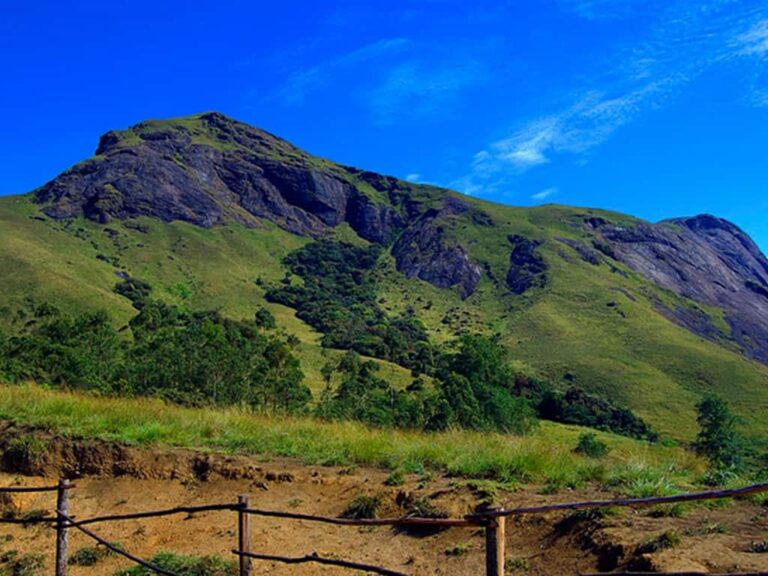
In the lush green expanse of Kerala’s Western Ghats rises a majestic peak that touches the skies — Anamudi, the highest mountain in South India. At an impressive elevation of 2,695 meters (8,842 feet), this mountain is often hailed as the “Mount Everest of South India.” With its unique biodiversity, captivating landscapes, and cultural significance, Anamudi has become a symbol of natural pride and ecological wonder.
🌍 Geographical Location and Terrain
Anamudi is located at the confluence of Idukki and Ernakulam districts in Kerala. It is nestled within the boundaries of the Eravikulam National Park, one of India’s premier protected ecological reserves. Surrounded by dense forests, rolling tea plantations, mist-covered valleys, and plunging gorges, the mountain provides a dramatic canvas of natural beauty that changes color with the seasons.
This region falls under the Western Ghats mountain range, a UNESCO World Heritage Site known for its exceptional biological diversity and environmental significance. The high-altitude landscape of Anamudi is particularly rich in endemic species and plays a crucial role in regulating the regional climate and hydrology.
🐘 Origin of the Name ‘Anamudi’
The name Anamudi originates from two Tamil-Malayalam words — “Anai” meaning elephant, and “Mudi” meaning forehead or head. Locals named the mountain so because its dome-shaped summit resembles the forehead of an elephant. The symbolism runs deeper, as elephants are not only culturally revered in Kerala but also roam the forests around Anamudi.
Beyond the physical resemblance, Anamudi finds mention in local folklore and mythologies, often associated with sages, divine presence, and ancient spiritual practices.
📊 Key Facts About Anamudi
- Location: Border of Idukki and Ernakulam districts, Kerala
- Elevation: 2,695 meters (8,842 feet) above sea level
- Mountain Range: Western Ghats
- Protected Area: Eravikulam National Park
- Meaning of Name: “Elephant’s Forehead” (Anai = elephant, Mudi = head)
- Climate: Cool and humid; monsoon season is closed for visitors
- Best Time to Visit: September to March
- Part of: UNESCO World Heritage Site — Western Ghats Biosphere Reserve
- River Origins: Periyar, Bharathapuzha, and Pampa rivers originate from this region
🌿 A Treasure Trove of Biodiversity
Anamudi is more than just a towering geological structure — it is a thriving hub of rare flora and fauna. The region is home to many endangered and endemic species, making it one of the most important ecological zones in India.
Some notable species found here include:
- 🐐 Nilgiri Tahr (Hemitragus hylocrius): A critically endangered mountain goat species that thrives only in the Western Ghats, especially around Anamudi.
- 🌸 Neelakurinji (Strobilanthes kunthiana): A rare flower that blooms once every 12 years, blanketing the hills in a spectacular shade of blue.
- 🌺 Orchids & Medicinal Herbs: The area hosts a wide variety of orchid species and ancient medicinal plants used in Ayurveda.
Along with these, the region supports various species of butterflies, amphibians, reptiles, and birds, many of which are endemic or threatened globally.
🚶♂️ Adventure & Eco-Tourism: A Journey Through the Wild
Anamudi has become a hotspot for eco-tourism and trekking enthusiasts. However, as it lies within a protected national park, visitors must obtain prior permission from the Kerala Forest Department, and are required to be accompanied by licensed guides.
Trekking Route Highlights:
- Starting Point: Rajamalai (Eravikulam National Park Entry Gate)
- Trail Length: 8–10 kilometers (moderate difficulty)
- Features: Panoramic views, forest canopies, waterfalls, wildlife sightings, and complete tranquility.
Due to conservation efforts, strict limits are placed on the number of daily visitors to preserve the region’s ecological balance. The park remains closed during monsoon (June to August) to avoid risks posed by heavy rains and landslides.
🌊 Source of Life: Origin of Major Rivers
Anamudi plays a critical role in the hydrological ecosystem of Kerala. It serves as the origin point for several major rivers:
- Periyar River: The lifeline of central Kerala, vital for agriculture, drinking water, and hydroelectric power.
- Bharathapuzha River: Known as the ‘Nila’, this river is deeply rooted in Kerala’s culture and history.
- Pampa River: Considered sacred, it flows past the famous Sabarimala pilgrimage site.
These rivers nourish the land, support local agriculture, and sustain countless communities along their course.
🔬 Research & Conservation: A Living Laboratory
Anamudi’s ecological importance makes it a prime location for scientific research, especially in the fields of climate change, biodiversity, and conservation biology. Various Indian and international institutions conduct ongoing studies here.
Focus Areas of Research:
- Impact of global warming on endemic species
- Mapping biodiversity hotspots
- Studying ecological succession and forest regeneration
- Community-based conservation and eco-tourism initiatives
These efforts are vital in understanding how to preserve one of India’s most sensitive ecosystems in the face of mounting environmental threats.
⚠️ Environmental Challenges & the Need for Sustainable Practices
Despite its protected status, Anamudi faces several environmental threats, including:
- Unregulated tourism and footfall pressure
- Littering and plastic pollution
- Habitat fragmentation and illegal construction
- Climate change-induced biodiversity shifts
Conservationists stress the importance of sustainable tourism practices. Visitors must respect nature, avoid single-use plastics, stick to designated trails, and refrain from disturbing wildlife.
🌅 Conclusion: Anamudi — More Than Just a Mountain
Anamudi is not merely a geographic elevation; it is a symbol of ecological richness, spiritual depth, and natural magnificence. It reminds us of the delicate balance that exists between human activity and nature. Whether it’s witnessing a breathtaking sunrise from its summit, marveling at the rare flora, or experiencing the thrill of a forest trek — every moment spent near Anamudi is unforgettable.
In a world increasingly disconnected from nature, Anamudi stands as a powerful reminder of what we must cherish and protect.
📝 Travel Tips & Responsible Tourism
- 📅 Best Time to Visit: September–March
- 🛑 Avoid during Monsoon: June–August (park closed)
- 🧾 Obtain Permits: Through Kerala Forest Department’s official portal
- 🚯 Don’t Litter: Carry reusable bottles, avoid plastic
- 📸 Photography Allowed: But without disturbing wildlife
- 👣 Stay on Trails: Always use authorized paths and guides
📌 Final Thought:
Anamudi is where the soul of South India touches the sky. A trip here is not just a vacation — it’s a journey into one of Earth’s last remaining natural paradises.