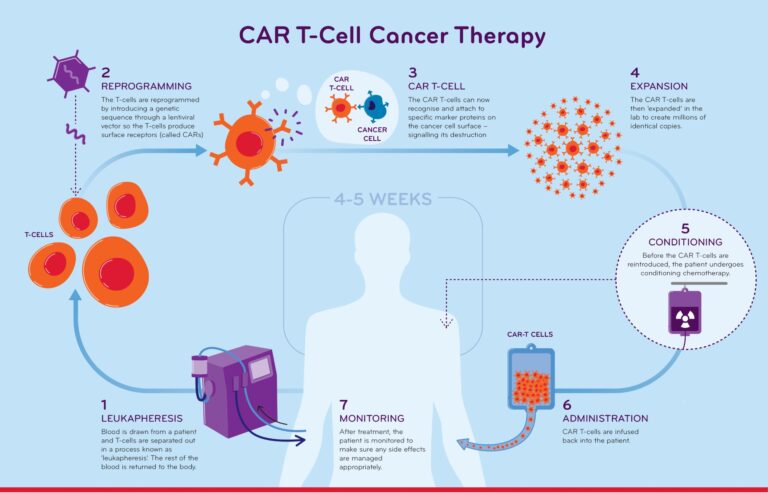
CAR T-cell therapy, a revolutionary approach to cancer treatment, has recently gained significant attention in India. This innovative therapy involves modifying a patient’s own immune cells to target and destroy cancer cells. While CAR T-cell therapy has shown remarkable success in treating certain types of blood cancers, it has also been associated with high costs and potential side effects.
What is CAR T-cell therapy?
CAR T-cell therapy is a type of immunotherapy that uses a patient’s own immune cells, called T cells, to fight cancer. T cells are a type of white blood cell that plays a crucial role in the immune system. In CAR T-cell therapy, T cells are collected from the patient’s blood and genetically modified to express a special receptor called a chimeric antigen receptor (CAR). This CAR allows the T cells to recognize and bind to specific antigens on cancer cells. The modified T cells are then infused back into the patient, where they can target and kill cancer cells.
How effective is CAR T-cell therapy?
CAR T-cell therapy has demonstrated impressive results in treating certain types of blood cancers, particularly those that have relapsed or are refractory to standard treatments. Clinical trials have shown high remission rates and durable responses in patients with acute lymphoblastic leukemia (ALL) and large B-cell lymphomas. However, CAR T-cell therapy is not a cure for all cancers, and its effectiveness varies depending on the type and stage of cancer, as well as individual patient factors.
What are the challenges and costs associated with CAR T-cell therapy?
Despite its potential, CAR T-cell therapy faces several challenges. One major hurdle is the high cost of treatment, which can be prohibitive for many patients. The complex manufacturing process and personalized nature of CAR T-cell therapy contribute to its high cost. Additionally, CAR T-cell therapy can cause significant side effects, such as cytokine release syndrome (CRS) and immune effector cell-associated neurotoxicity syndrome (ICANS). These side effects require careful monitoring and management by experienced medical teams.
What is the future of CAR T-cell therapy in India?
CAR T-cell therapy is still a relatively new treatment in India, but it holds great promise for the future of cancer care. As more research is conducted and costs are potentially reduced, CAR T-cell therapy may become more accessible to a wider range of patients. Ongoing clinical trials are exploring the use of CAR T-cell therapy in other types of cancers, including solid tumors. Furthermore, efforts are being made to develop more affordable CAR T-cell therapies in India, which could significantly improve access to this life-saving treatment.