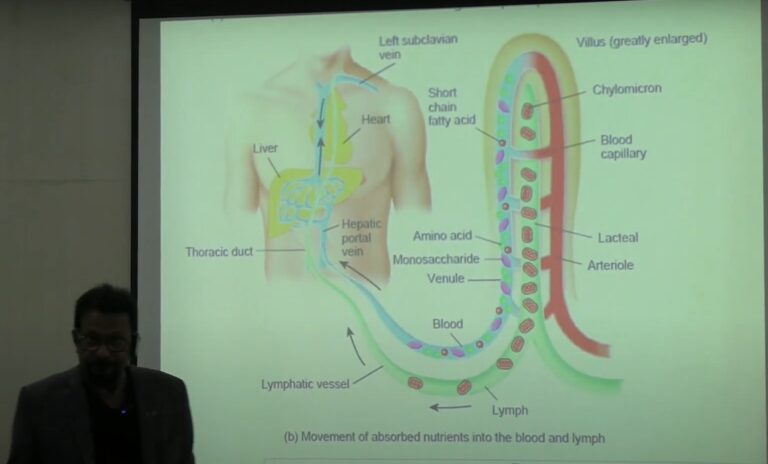
Dr. Samir Kumar Nag, a renowned physiologist, recently delivered an enlightening lecture at the prestigious Tripura Santiniketan Medical College. The lecture, titled “Describe the Compositions, Mechanism of Secretion, Functions, and Regulations of Intestinal Juices,” attracted students, faculty members, and medical practitioners eager to expand their understanding of this essential topic in human physiology.
Setting the Stage for a Complex Topic
The event began with a warm welcome from the college’s Dean, Dr. Anuradha Singh, who emphasized the importance of intestinal juices in maintaining digestive health. She praised Dr. Nag’s contribution to the field of medical science and expressed her gratitude for his willingness to share his expertise with the institution.
Dr. Nag started his presentation by laying out the objectives of the lecture, which were to explain the biochemical composition, mechanisms underlying secretion, vital functions, and regulatory pathways of intestinal juices. His engaging delivery style made complex scientific concepts accessible, even to those less familiar with the subject.
The Biochemical Composition of Intestinal Juices
Dr. Nag explained that intestinal juices, also known as succus entericus, are a combination of enzymes, water, electrolytes, and mucus. Key components include:
- Enzymes: Such as maltase, lactase, sucrase, and lipase, which aid in the breakdown of carbohydrates and fats.
- Electrolytes: Including bicarbonates, which neutralize stomach acids and maintain an optimal pH for enzyme activity.
- Mucus: To protect the intestinal lining and facilitate the smooth passage of food.
- Water: A medium that ensures the solubility of nutrients for absorption.
The detailed explanation provided a solid foundation for understanding how these components work synergistically to optimize digestion and nutrient absorption.
Mechanisms of Secretion
Dr. Nag delved into the mechanisms governing the secretion of intestinal juices. He highlighted the role of:
- Enterocytes and Goblet Cells: Specialized cells in the intestinal lining responsible for producing enzymes and mucus.
- Hormonal Regulation: Hormones like secretin and cholecystokinin (CCK) play a critical role in stimulating secretion in response to the presence of chyme.
- Neuronal Signals: The enteric nervous system (ENS) coordinates with the central nervous system (CNS) to regulate secretion based on the body’s digestive needs.
He also discussed the adaptive nature of these mechanisms, noting how secretion rates can change depending on dietary habits and overall health.
Functions of Intestinal Juices
“The primary role of intestinal juices,” Dr. Nag stated, “is to complete the digestion of food molecules and prepare them for absorption.” He elaborated on their key functions:
- Digestive Aid: Enzymes break down complex carbohydrates into simple sugars, proteins into amino acids, and fats into fatty acids and glycerol.
- Nutrient Absorption: The presence of bicarbonates ensures a suitable pH environment for efficient nutrient absorption in the small intestine.
- Protection: Mucus acts as a protective barrier, shielding the intestinal epithelium from mechanical damage and pathogenic organisms.
- Immune Support: Intestinal juices also contribute to the gut’s immune response by maintaining a healthy microbiome.
Dr. Nag’s clear and structured explanation made it evident how these functions are indispensable for human health.
Regulation of Intestinal Juices
Moving to the regulatory aspects, Dr. Nag provided insights into the complex interplay of factors that control the production and secretion of intestinal juices. He focused on:
- Neuro-hormonal Control: Secretin and CCK are released in response to acidic chyme and fats, respectively, ensuring timely secretion of intestinal juices.
- Feedback Mechanisms: Negative feedback loops prevent overproduction, maintaining a balance that avoids unnecessary energy expenditure.
- Dietary Influences: High-fiber diets can stimulate mucus production, while high-fat diets may increase enzyme secretion.
- Pathophysiological Conditions: Conditions like Crohn’s disease or infections can disrupt the regulation of intestinal juices, leading to digestive complications.
An Engaging Q&A Session
The lecture concluded with an interactive Q&A session, where students and faculty posed thought-provoking questions. Dr. Nag addressed topics such as the impact of modern dietary habits on intestinal health, the role of probiotics, and potential advancements in therapeutic interventions targeting intestinal juices.
One question from a student stood out: “How do intestinal juices adapt to different types of diets?” Dr. Nag’s response highlighted the incredible adaptability of the human digestive system, which can modulate enzyme production based on dietary composition over time.
Feedback from the Audience
The attendees were unanimous in their praise for Dr. Nag’s comprehensive and engaging lecture. Dr. Ramesh Dutta, a senior faculty member, remarked, “Dr. Nag’s ability to simplify complex mechanisms and connect them to practical applications is truly commendable.”
Medical students found the lecture particularly enlightening. “This session has significantly enhanced my understanding of intestinal physiology,” said third-year student Priya Sharma.
Dr. Samir Kumar Nag’s lecture on the compositions, mechanism of secretion, functions, and regulations of intestinal juices was an academic milestone for Tripura Santiniketan Medical College. His expertise and ability to present intricate physiological concepts in a relatable manner left a lasting impression on all attendees.
The event underscored the importance of intestinal juices not only in digestion but also in maintaining overall health. As medical science advances, insights like those shared by Dr. Nag will continue to shape the understanding and treatment of digestive disorders, benefiting patients worldwide.