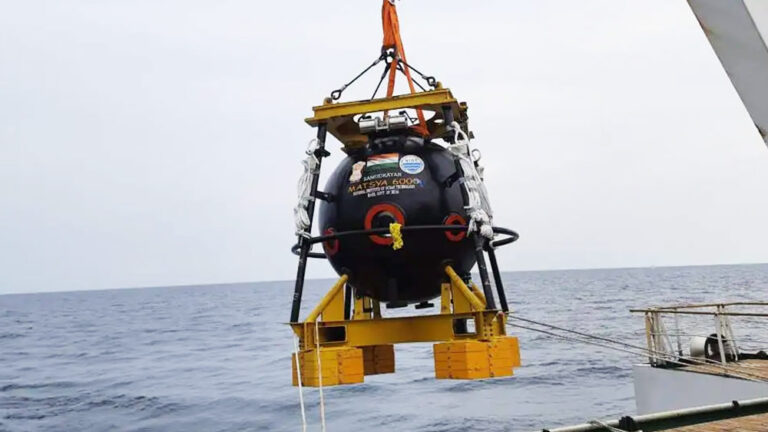
India Poised: India is preparing to script a historic milestone in global scientific exploration by venturing nearly 6,000 meters beneath the surface of the Indian Ocean. In a recent announcement, the country’s environment and science authorities confirmed plans to begin construction of an advanced deep-sea subsea research laboratory—an ambitious project that aims to push the boundaries of ocean science, marine technology, and biotechnology. Once operational, this facility is expected to be among the deepest permanent ocean research laboratories in the world.
This bold initiative marks a turning point in India’s scientific journey, signaling the nation’s determination to explore one of Earth’s most mysterious frontiers: the deep ocean. Beyond national pride, the project holds immense promise for understanding climate change, discovering new life forms, developing cutting-edge technologies, and securing sustainable access to marine resources.
Exploring the Last Great Frontier
While humanity has explored space with remarkable success, the deep ocean remains largely unknown. More than 80 percent of the ocean floor is still unmapped and unexplored, especially at extreme depths where sunlight never reaches and pressure is crushingly high. Establishing a research laboratory at 6,000 meters will allow Indian scientists to observe this harsh environment continuously, rather than relying solely on short-duration missions.
The laboratory will be designed to withstand extreme pressure, near-freezing temperatures, and long-term exposure to saltwater corrosion. Equipped with high-precision sensors, robotic systems, autonomous underwater vehicles, and real-time data transmission tools, the facility will enable long-term observation of deep-sea processes that were previously beyond reach.
Deep Ocean Mission: A Vision Beyond the Surface
At the heart of this initiative lies India’s Deep Ocean Mission—a multi-dimensional scientific program envisioned to elevate the country’s ocean research capabilities to global standards. The mission is not limited to a single laboratory; it is a comprehensive framework that integrates geology, biology, climate science, engineering, robotics, and resource management.
Through the Deep Ocean Mission, India aims to understand how deep-sea processes influence surface ecosystems, weather systems, and long-term climate patterns. The subsea laboratory will function as a permanent observatory, collecting continuous data on ocean currents, chemical composition, seismic activity, and biological interactions occurring far below the waves.
Uncovering Life in Extreme Conditions
One of the most exciting prospects of deep-sea exploration is the study of marine life that thrives in total darkness under extreme pressure. These organisms often possess extraordinary biological adaptations—unique enzymes, metabolic pathways, and survival mechanisms—that could revolutionize medicine and biotechnology.
Scientists expect the laboratory to facilitate the discovery of previously unknown species of microorganisms, invertebrates, and possibly even larger life forms. Such discoveries could lead to breakthroughs in drug development, industrial enzymes, and bio-inspired materials. Understanding how life survives in such hostile environments may also offer clues about the origin of life on Earth and the possibility of life beyond our planet.
Advancing Marine Technology and Robotics
Operating at depths of 6,000 meters demands technological excellence. The project is expected to accelerate innovation in deep-sea engineering, robotics, and materials science. India plans to develop its own fleet of deep-sea drones, remotely operated vehicles, and robotic arms capable of performing complex tasks under immense pressure.
These technologies will not only support ocean research but may also find applications in disaster response, offshore infrastructure maintenance, defense systems, and even future space missions. By building indigenous expertise in these areas, India moves closer to technological self-reliance in one of the world’s most challenging environments.
Understanding Climate Change from the Ocean Floor
The ocean plays a central role in regulating Earth’s climate by absorbing heat and carbon dioxide from the atmosphere. However, many of the processes governing this regulation occur in the deep ocean and remain poorly understood. The new subsea laboratory will allow scientists to monitor long-term changes in temperature, acidity, and carbon storage at great depths.
Such data is critical for improving climate models and predicting the future impacts of global warming. Insights gained from the laboratory could help policymakers develop better strategies for climate adaptation, coastal protection, and disaster preparedness, especially for nations vulnerable to rising sea levels.
Economic Potential Beneath the Waves
Beyond science and environmental research, the deep ocean holds significant economic potential. The seabed is known to contain valuable mineral resources, including polymetallic nodules rich in nickel, cobalt, manganese, and rare earth elements—materials essential for renewable energy technologies, electric vehicles, and modern electronics.
The research laboratory will enable India to study these resources in detail, focusing on responsible and sustainable exploration methods. By understanding environmental impacts before extraction, the country can balance economic development with ecological protection, setting an example for ethical deep-sea resource management.
A Historic Milestone for Indian Science
The establishment of a deep-sea laboratory at 6,000 meters represents a defining moment in India’s scientific history. It places the nation among a small group of countries capable of carrying out extended research in the hadal and abyssal zones of the ocean.
Equally important is the project’s impact on education and research opportunities. It will inspire a new generation of ocean scientists, engineers, and technologists, creating pathways for advanced research and international collaboration. Universities, research institutions, and startups are expected to benefit from the knowledge and technologies emerging from the mission.
India’s Role in Shaping the Future of Ocean Science
As the world grapples with climate change, biodiversity loss, and resource scarcity, the importance of understanding the oceans has never been greater. India’s deep-sea initiative reflects a long-term vision—one that recognizes the ocean as both a scientific frontier and a shared global responsibility.
By venturing 6,000 meters beneath the surface, India is not merely exploring the depths of the Indian Ocean; it is redefining its role in global science and innovation. The data, technologies, and discoveries emerging from this project could influence environmental policy, technological development, and scientific knowledge for decades to come.
A Glimpse into the Future
The deep-sea laboratory symbolizes more than technological achievement—it represents humanity’s enduring curiosity and quest for knowledge.India’s bold step into the ocean’s depths sends a powerful message to the world: the future of science lies not only in the skies above but also in the vast, unexplored waters below.
As construction begins and plans move toward reality, the world will be watching closely. What lies 6,000 meters beneath the Indian Ocean may well hold answers to some of the most pressing questions of our time—and India is preparing to uncover them.
[…] Read More: India Poised to Unlock the Deep: A New Chapter in Ocean Research at 6,000 Meters Below Sea Level […]