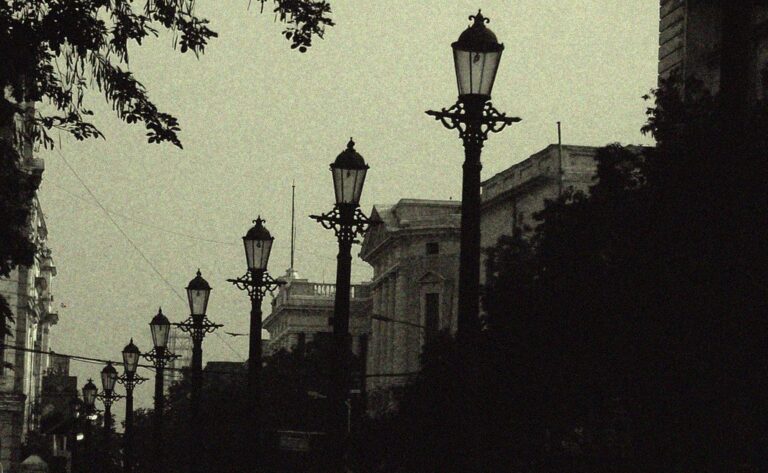
📜 Introduction:
Street lights are such an integral part of modern life that we barely pause to consider their origin. Today, they illuminate our cities, towns, and even the remotest of villages, ensuring safety, mobility, and continuity of life after sunset. But imagine a time when dusk meant darkness — deep, looming darkness. It was in this darkness that a glimmer of light first shone in colonial Kolkata, setting the precedent for India’s urban transformation.
On 31st July 1803, India saw its first experimental street light, not in Delhi or Mumbai, but in the then capital — Kolkata (Calcutta). That humble oil lamp was much more than a source of light; it was a symbol of modernization, vision, and civil advancement.
🕰️ Historical Context:
By the late 18th century, Kolkata had emerged as the political and commercial epicenter of British India under the East India Company. The British aimed to shape the city into a modern urban center, echoing the aesthetics and functionality of contemporary European cities.
As part of this effort, several civic developments were introduced — roads, public buildings, sanitation, drainage, and more. Among these, the concept of street lighting was revolutionary, aimed not only at enhancing urban infrastructure but also at instilling a sense of security and order in a colonial city evolving rapidly.
🕯️ The First Light: When and Where?
- 📅 Date: 31st July, 1803
- 📍 Location: The stretch between Esplanade and Chowringhee (present-day Dharmatala region)
- 🔥 Type: Oil Lamps
- 🏛️ Initiated by: Calcutta Municipal Corporation
These early street lights were lit using kerosene or whale oil and had to be manually operated. Assigned workers would light the lamps every evening and extinguish them at dawn. Initially placed on key roads, these lamps served both a practical and symbolic role.
In a time when the setting sun brought city life to a standstill, these flickering flames made it possible to walk, travel, and even do business at night — a bold leap forward for the time.
💡 The Advent of Electric Lighting:
The next significant chapter in Kolkata’s street lighting journey came with the introduction of electricity.
- ⚡ First Electric Street Light (Experimental): 1879
- 🔌 Widespread Implementation: 1897, with the establishment of the Calcutta Electric Supply Corporation (CESC)
Though experimental electric lighting began in the late 19th century, it was only after the founding of CESC that electric street lights were introduced on a broader scale. These lights not only brightened the city’s physical space but also transformed its cultural and commercial life.
Shops stayed open longer, theatres operated into the night, and public events could now be held after dark. The city became vibrant and active even under the moonlight — a novelty for any Indian city at the time.
📜 Historical Significance:
The introduction of street lighting in Kolkata wasn’t just a technological upgrade — it marked the beginning of a new urban ethos. It helped redefine the city’s relationship with time, extending productivity and movement beyond daylight hours.
- Civic Impact: Improved safety for pedestrians and carriages
- Economic Boost: Extended business hours and more nighttime commerce
- Cultural Life: Late-night events, social gatherings, and public functions
Kolkata soon became a blueprint for urban lighting in other Indian cities like Bombay (Mumbai), Madras (Chennai), and Delhi. The idea of illuminated public spaces, once foreign, became desirable — and eventually, essential.
📍 The Present-Day Scenario:
Fast forward to the 21st century — India has witnessed an explosion in urban and rural electrification. Street lighting has evolved far beyond the oil lamps of 1803 or the electric bulbs of 1897. Today, street lighting is:
- 🌞 Solar-powered in many villages and towns
- 💡 LED-based for energy efficiency
- 📡 Smart and automated, using IoT technology in smart cities
- ♻️ Environmentally conscious, reducing carbon footprints
Modern street lighting not only ensures illumination but also plays a key role in sustainability, energy management, and urban aesthetics. From major metropolises to small hamlets, every corner of India is now touched by this legacy of light.
🌟 Kolkata: Pioneer of Illumination
The story of India’s first street light isn’t just a footnote in history — it’s a milestone in India’s journey toward urban modernization. That lone oil lamp, lit over 200 years ago on a dusty road in Kolkata, represents the vision of a future where light is not a luxury but a right.
Kolkata, through this pioneering step, became more than just a colonial capital. It became the torchbearer of change, guiding other cities toward better infrastructure, safer streets, and more inclusive urban life.
✍️ Conclusion:
When the first street light flickered to life in colonial Kolkata in 1803, it did more than just pierce the darkness — it ignited a spark of progress. It laid the groundwork for an India that could dream beyond daylight, that could work, live, and celebrate even after the sun went down.
Today, as India lights up its smart cities, adopts green energy, and moves toward digital infrastructure, we must pause and remember that it all began with a single oil lamp on the streets of Kolkata.
“Light, once lit, becomes a memory — a legacy — a direction. Kolkata’s first street light wasn’t just an event, it was a beginning.”
📝 References:
- Kolkata Municipal Corporation Archives
- Historical Records from the British Library
- Calcutta Electric Supply Corporation (CESC) Documentation
- Heritage Street Lighting India Project
- Urban Infrastructure Reports, Government of India