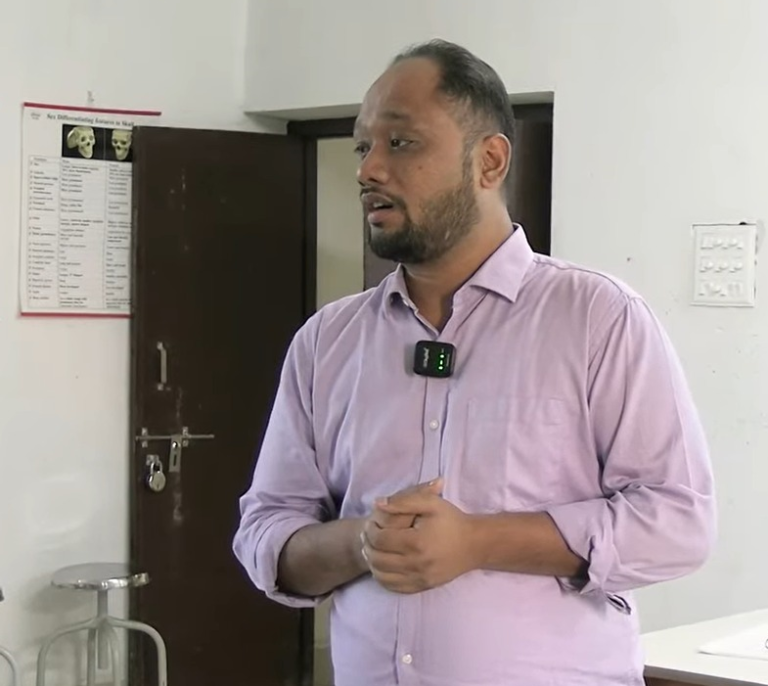
In a groundbreaking event that melded theory with practical application, Dr. Koushik Roy, a prominent expert in Forensic Medicine and Toxicology, delivered a real-time demonstration and lecture at Santiniketan Medical College & Hospital. The session, which attracted the attention of both medical students and professionals, marked a significant leap forward in bridging the gap between textbook learning and real-world application of forensic principles.
A Unique Educational Approach
The lecture, hosted in Santiniketan Medical College’s state-of-the-art auditorium, was aimed at providing medical students with a comprehensive understanding of forensic medicine and toxicology—two critical fields in medical science. While forensic medicine deals with medical aspects of legal cases, toxicology is focused on the effects of chemicals and substances on human health. The practical demonstration was designed to show how the principles of these subjects are applied in real-life investigations, such as autopsies and toxicological screenings.
Dr. Koushik Roy, a highly respected figure in forensic science, explained that the primary goal of the lecture was to expose students to the real-time processes involved in forensic investigations. “Traditional textbooks provide essential knowledge, but there is no substitute for hands-on experience,” Dr. Roy remarked during the session. “By conducting real demonstrations, students can better appreciate the gravity and intricacy of forensic medicine and toxicology.”
An Immersive Learning Experience
The students were not just passive listeners but active participants in the demonstration. The session began with Dr. Roy presenting case studies of recent forensic investigations, using anonymized data from ongoing cases to highlight the nuances of the work involved. These included toxicological reports, details of autopsy procedures, and methods of identifying substances that could be used to cause harm or death.
One of the key components of the demonstration was the use of cadaveric material for autopsy simulation. In collaboration with the medical college’s forensic pathology department, Dr. Roy conducted a mock autopsy, explaining each step in detail as students observed the process closely. From determining cause of death to identifying signs of poisoning, the students were shown how to make crucial distinctions that could shape the outcome of a legal case.
Dr. Roy’s unique teaching style engaged students not just with academic material but with ethical considerations as well. “Every case is a puzzle, and as forensic experts, we are the ones who can help put the pieces together,” Dr. Roy emphasized. “However, this comes with great responsibility. We must approach every case with integrity and a strong sense of ethics.”
Exploring the Interdisciplinary Nature of Forensic Medicine and Toxicology
Forensic medicine and toxicology are interdisciplinary subjects, requiring a deep understanding of both medical science and the law. Dr. Roy explained how knowledge in these fields intersects with other branches of medicine, such as pathology, pharmacology, and microbiology, to ensure accurate and scientifically sound findings. The lecture offered medical students a rare opportunity to understand not just the clinical aspects but also the legal frameworks that guide forensic investigations.
Dr. Roy also discussed the evolving role of technology in forensic medicine. With the advent of digital forensics, DNA analysis, and advanced toxicological testing, forensic practitioners now have a broader range of tools at their disposal. He illustrated the impact of these advancements by discussing real-world cases where forensic science and cutting-edge technology helped solve complicated legal matters.
A Focus on Toxicology
The session took a deep dive into the specific field of toxicology, focusing on how various substances—ranging from common household chemicals to illicit drugs—affect the human body. Dr. Roy demonstrated how toxicologists conduct tests to identify substances that could be harmful or even fatal, emphasizing the critical importance of precision in these investigations.
Students were given an interactive demonstration of how toxic substances are analyzed in a laboratory setting. Dr. Roy presented several vials of unknown substances, explaining how forensic toxicologists use scientific methods such as gas chromatography and mass spectrometry to detect poisons or narcotics in biological samples. “A forensic toxicologist is like a detective,” Dr. Roy said. “We analyze the evidence, interpret the findings, and provide crucial information that may determine the course of justice.”
The session also covered the signs of poisoning in both acute and chronic cases, allowing students to understand how toxicology can play a pivotal role in solving crimes, such as suspected homicides or cases of food poisoning.
Impact on Medical Education
The integration of real-life demonstrations into the medical curriculum is a shift that Santiniketan Medical College & Hospital is embracing wholeheartedly. The medical college’s faculty members expressed their excitement about how this approach elevates the educational experience for students, making learning more dynamic and engaging.
“The medical field is evolving rapidly, and it is crucial that our students are equipped not only with theoretical knowledge but also with practical skills that they can apply in real-world scenarios,” said Dr. Rajesh Kumar, the Head of the Forensic Medicine Department at Santiniketan Medical College & Hospital. “Dr. Koushik Roy’s demonstration is a perfect example of how we can enrich our curriculum and prepare our students for the challenges they will face as future professionals.”
The event was also attended by medical professionals, law enforcement personnel, and legal experts, all of whom were keen on learning about the intersection of medical science and law enforcement. Many expressed the importance of such collaborative events to bridge the gap between law and medicine.
“We often collaborate with forensic experts, and it is essential for us to understand the scientific methods behind their conclusions,” noted Inspector Arun Gupta, who attended the lecture. “Today’s session helped me gain deeper insights into the nuances of forensic toxicology, which is critical for law enforcement work.”
Future Prospects and Educational Initiatives
The success of this event has sparked conversations about the potential for similar demonstrations and workshops in the future. Dr. Roy expressed his commitment to further enhancing forensic medical education, particularly in remote and under-resourced areas. His initiative to offer real-time demonstrations is part of a broader effort to make forensic education more accessible and relevant to students and professionals worldwide.
Santiniketan Medical College is already planning additional lectures and practical sessions in other specialized fields of forensic science, with the aim of creating a more immersive learning environment for its students. The college’s management expressed their dedication to offering top-tier medical education, which includes providing students with access to leading experts in various medical specialties.
The Real Classroom Demonstration on Forensic Medicine and Toxicology, conducted by Dr. Koushik Roy at Santiniketan Medical College & Hospital, has set a new benchmark for how medical education can be enriched through hands-on learning experiences. By blending academic theory with real-world applications, Dr. Roy has helped shape the next generation of forensic experts, ensuring that they are well-equipped to handle the complexities of their future careers in a rapidly evolving medical landscape. This session stands as a testament to the college’s commitment to delivering cutting-edge, relevant, and impactful education in the field of forensic medicine.