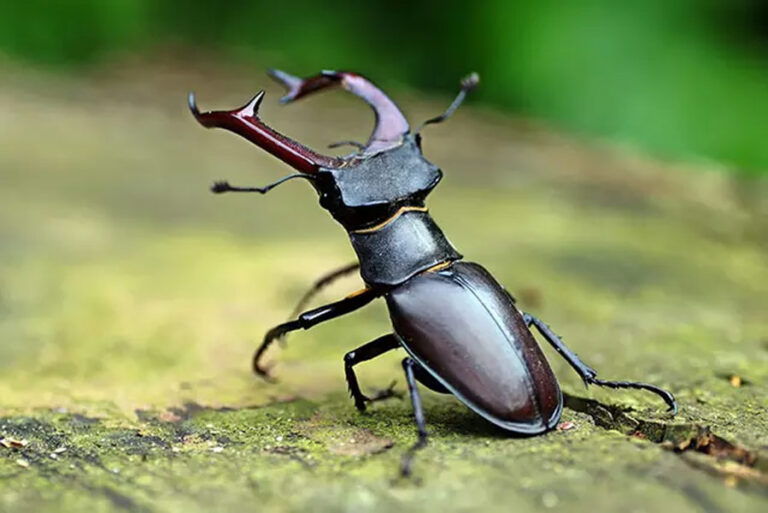
Stag Beetle: Nature is filled with extraordinary creatures, many of which remain unknown to most people. Among them is a small yet astonishing insect that has captured global attention for its rarity, ecological importance, and unbelievable market value — the stag beetle. Though tiny in size, this insect stands at the center of scientific research, cultural belief systems, and even international collector markets. In some cases, a single stag beetle has been reported to be valued at nearly ₹75 lakh, placing it among the most expensive insects in the world.
But what makes this beetle so special? Is its value purely biological, or does human belief play a role? To truly understand the stag beetle, one must explore its biology, environment, cultural symbolism, and the growing need for its conservation.
An Introduction to the Stag Beetle
The stag beetle belongs to the Lucanidae family and is best known for its distinctive appearance. The most striking feature, especially in males, is its enlarged mandibles. These jaws resemble the antlers of a stag (male deer), which is how the beetle earned its common name.
Far from being decorative, these mandibles serve a vital biological purpose. Male stag beetles use them to wrestle with rivals during mating season, competing for access to females. The presence of different mandible shapes and sizes within the same species is known as male polymorphism, an evolutionary strategy linked to sexual competition.
Why Is the Stag Beetle So Valuable?
The claim that a stag beetle can be worth ₹75 lakh often sparks disbelief. While not every stag beetle carries such a price tag, certain rare species and exceptionally large specimens are indeed prized by collectors worldwide.
Several factors contribute to this high valuation:
- Rarity
Many species of stag beetles are becoming increasingly rare due to habitat loss and environmental changes. - Long Development Cycle
Unlike most insects, a stag beetle takes several years to complete its life cycle, making population recovery slow. - Collector Demand
In countries such as Japan, parts of Europe, and Southeast Asia, stag beetles are highly sought after by serious collectors. - Cultural Beliefs
In various cultures, stag beetles are believed to symbolize luck, strength, and prosperity. Some even believe that possessing one can bring sudden wealth.
This unique mix of biology, scarcity, and belief has driven certain specimens to extraordinary prices.
Habitat and Geographic Distribution
Stag beetles thrive in warm and humid environments and are unable to tolerate extreme cold. Their natural habitats include:
- Dense forests
- Areas with decaying trees
- Urban parks and gardens
- Orchards and wooded outskirts of cities
One crucial requirement defines all stag beetle habitats: dead wood. Decaying logs and tree stumps are essential for their survival and reproduction. Without dead wood, stag beetles cannot complete their life cycle.
Ironically, modern landscaping practices that remove fallen trees and rotting logs have become one of the biggest threats to their existence.
Diet and Feeding Behavior
The feeding habits of stag beetles further highlight their ecological importance.
Adult Stag Beetles
Adults primarily feed on:
- Tree sap
- Juices from rotting fruits
Their adult lifespan is relatively short, and feeding is limited. Most of their energy is stored during the larval stage.
Larval Stage
Stag beetle larvae feed exclusively on dead wood. Using strong mandibles, they gradually break down decaying timber into smaller particles, aiding natural decomposition.
Importantly, stag beetles do not attack living trees, crops, or garden plants. This makes them entirely harmless and environmentally beneficial.
Life Cycle and Physical Characteristics
One of the most fascinating aspects of the stag beetle is its unusually long lifespan for an insect.
- Average lifespan: 3 to 7 years
- Larval stage duration: 2 to 5 years
- Adult stage: A few months
Physical Measurements (on average):
- Weight: 2 to 6 grams
- Male length: 35–75 mm
- Female length: 30–50 mm
The majority of its life is spent underground as a larva, slowly feeding and developing. Once adulthood is reached, the beetle’s primary purpose becomes reproduction, completing the cycle of life.
Ecological Role: Nature’s Silent Worker
Scientists classify stag beetles as decomposers, organisms that break down dead organic material. Their ecological contributions include:
- Recycling nutrients back into the soil
- Supporting forest regeneration
- Maintaining soil fertility
- Preserving ecosystem balance
Studies published in journals such as Scientific Data emphasize that decomposers like the stag beetle play a critical role in forest health. Without them, dead wood would accumulate, and nutrient cycles would be disrupted.
Medicinal and Traditional Beliefs
In some cultures, stag beetles or their body parts have been used in traditional medicine. However, modern science has yet to validate any specific medical benefits.
While these traditional practices remain largely anecdotal, they have contributed to the beetle’s perceived value and cultural importance. Experts urge caution against unverified medical claims and emphasize the need for ethical conservation practices.
Symbolism, Luck, and Human Belief
Perhaps the most intriguing aspect of the stag beetle lies outside science — in human belief.
Across various cultures, the stag beetle is associated with:
- Good fortune
- Strength and resilience
- Transformation and prosperity
Some believe that a stag beetle entering a home signals upcoming success or positive life changes. Others claim it can lead to sudden wealth or fulfillment of desires.
While such beliefs have no scientific basis, they significantly influence market demand and cultural fascination.
Threats and the Need for Conservation
Despite their importance, stag beetles face increasing threats:
- Deforestation
- Removal of dead wood
- Urban expansion
- Illegal wildlife trade
Environmental experts stress that conservation efforts must include:
- Protecting natural forest habitats
- Allowing dead wood to remain in ecosystems
- Preventing illegal collection and trade
In several countries, stag beetles are now protected by law.
Conclusion: More Than Just a Beetle
The stag beetle is a powerful reminder that even the smallest creatures can hold enormous significance. It is not merely an expensive insect or a symbol of luck — it is a vital component of forest ecosystems and a living example of nature’s complexity.
💠 If you ever encounter a stag beetle, consider yourself fortunate — not because it guarantees wealth, but because you have witnessed one of nature’s rarest and most fascinating creations.
[…] Read More: Stag Beetle: The World’s Most Mysterious Insect Where Nature, Wealth, and Human Belief Intersect […]