
In the heart of India lies a city that has transformed itself from a typical urban center into a symbol of cleanliness, discipline, and sustainable urban development — Indore, the crown jewel of Madhya Pradesh. This city has achieved what many thought impossible: being declared India’s cleanest city eight times in a row under the Swachh Survekshan, a nationwide cleanliness survey conducted as part of the Swachh Bharat Mission.
This extraordinary accomplishment did not happen overnight. It is the result of determined leadership, technological innovation, strict enforcement, and, above all, people’s active participation. Indore today serves as a model not only for Indian cities but also for urban planners across the globe seeking effective solutions to urban sanitation challenges.
📍 Where Is Indore?
- State: Madhya Pradesh
- Geographic Location: Situated along the banks of the Saraswati and Khan rivers
- Historical Importance: Once ruled by the Holkar dynasty, Indore was a major center during the Maratha Empire and is known for its rich cultural heritage.
While historically prominent, Indore’s recent rise to national and international recognition comes from a completely different domain: its unmatched commitment to urban cleanliness and sustainable waste management.
🛠️ How Did Indore Become India’s Cleanest City?
Indore’s transformation into a sanitation success story is built on strategic planning and grassroots implementation. Let’s explore the core elements of this achievement:
✅ 1. Door-to-Door Waste Collection
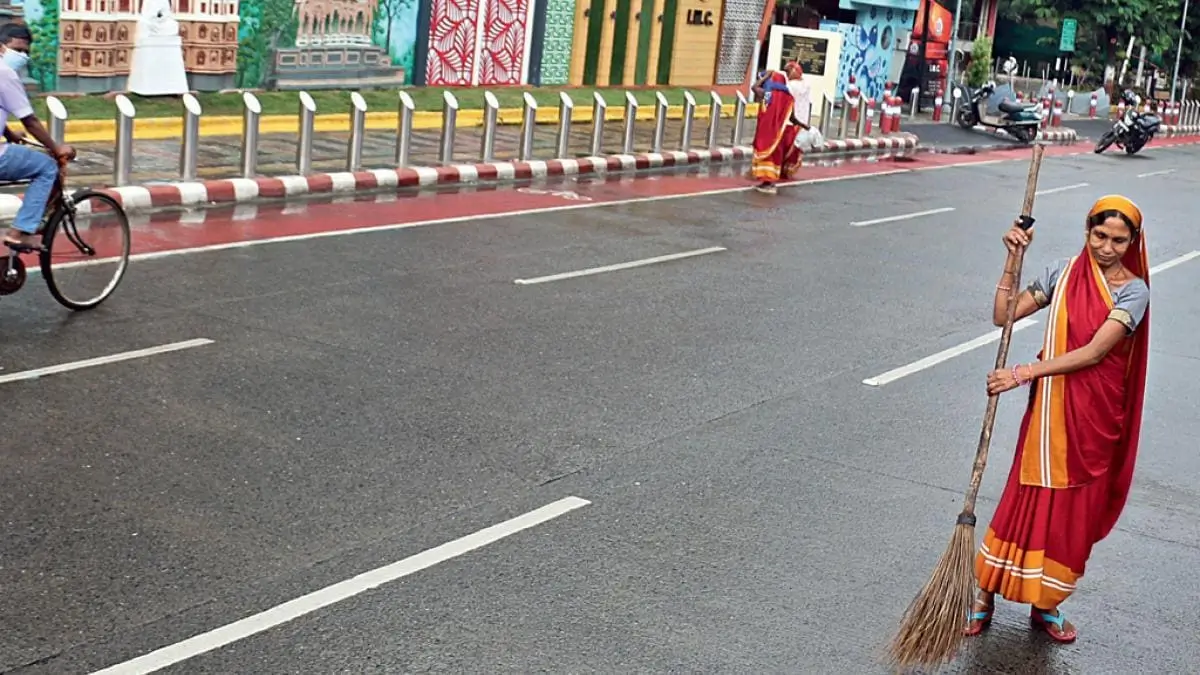
One of the foundational steps taken by the Indore Municipal Corporation (IMC) was to ensure daily door-to-door waste collection. No garbage is allowed to lie unattended on the streets. Whether it is a household, shop, hotel, or school — every premise is covered under this initiative.
Over 6,000 sanitation workers have been deployed to ensure waste is collected, sorted, and transported efficiently. The system operates with military-like precision and has instilled a sense of routine and responsibility among citizens.
✅ 2. Mandatory Waste Segregation at Source
Indore implemented and strictly enforced the segregation of waste into wet (organic) and dry (inorganic) categories at the household level. Citizens are required to use color-coded bins — green for biodegradable waste and blue for non-biodegradable waste.
This segregation makes recycling and composting far more efficient and reduces the burden on landfill sites.
✅ 3. 3R Policy – Reduce, Reuse, Recycle
Indore’s waste management strategy is deeply rooted in the globally recognized 3R principle:
- Reduce: Promoting minimal waste generation
- Reuse: Encouraging the reuse of materials wherever possible
- Recycle: Building infrastructure to process recyclable waste
The city runs regular awareness campaigns, competitions, and school programs to instill these values in daily life.
✅ 4. Technological Integration
Indore has embraced smart city solutions to optimize sanitation services. Some notable technological interventions include:
- Smart bins that send alerts when they are full
- GPS-enabled garbage trucks to monitor collection routes
- Real-time dashboards for administrators to track cleanliness metrics
- IMC citizen apps for complaint registration, awareness, and feedback
- Drone surveillance for monitoring garbage hotspots
These measures have made the entire process transparent, accountable, and data-driven.
✅ 5. Bio-Gas and Compost Plants
One of Indore’s most significant environmental contributions is its bio-CNG plant, among the largest in Asia. The plant converts organic waste — kitchen scraps, vegetable market waste, cow dung, and more — into clean fuel used to power city buses and generate electricity.
Additionally, the city has multiple composting units that turn organic waste into high-quality compost, used in agriculture and horticulture.
📣 Community Awareness and Citizen Participation
What truly sets Indore apart is the sense of ownership among its people. The Swachh Bharat Mission is not just a government scheme here — it is a people’s movement.
- School and college outreach programs teach the youth about hygiene and sustainability
- Street plays, music, and rallies convey messages in engaging ways
- Local NGOs and volunteer groups regularly conduct cleanliness drives
- Social media campaigns celebrate clean practices and highlight community heroes
This collective enthusiasm ensures that cleanliness remains a top civic priority for everyone — from children to senior citizens.
🏛️ Role of Governance: The IMC Model
Behind the visible transformation lies the tireless effort of the Indore Municipal Corporation (IMC). Their operational efficiency and responsiveness have made them a benchmark for other urban bodies.
- Zonal and ward-level micro-management ensures personalized attention to local issues
- Regular audits and cleanliness competitions keep performance high
- Strict enforcement of rules prevents public littering and promotes accountability
- Transparent grievance redressal systems build public trust
The combined efforts of the Mayor, Municipal Commissioner, Ward Councillors, and frontline workers have built a governance model worthy of emulation.
🏅 Recognition and Awards
| Year | Achievement | Rank |
|---|---|---|
| 2017 | First-time winner of “Cleanest City” | 1st |
| 2018 | Retained the title with improved systems | 1st |
| 2019 | Waste Segregation Model city | 1st |
| 2020 | Launched the pioneering Bio-Gas plant | 1st |
| 2021 | Earned “Garbage Free City” status | 1st |
| 2022 | Inducted into the Super Swachh League | 1st |
| 2023 | Digital Waste Management and Smart Tech | 1st |
| 2024 | Zero Waste Ward Implementation | 1st |
Indore’s uninterrupted winning streak is not just a feather in its cap — it’s a testament to consistency, innovation, and inclusivity.
🌍 A Learning City for Other Urban Centers
Recognizing its leadership, the Indian government has designated Indore as a “Learning City”. Municipal officers from across states — Maharashtra, Uttar Pradesh, Gujarat, Odisha, and beyond — regularly visit Indore to study its model.
Workshops, training sessions, and exchange programs have made Indore a hub for urban cleanliness education.
🔚 Conclusion: Lighting the Way for a Swachh Bharat
Indore’s success story illustrates a fundamental truth: clean cities are not just built by sweeping roads, but by shaping mindsets. With its structured policies, effective technology use, and enthusiastic citizenry, Indore has set a gold standard in urban sanitation.
As India marches ahead toward achieving the ambitious goals of the Swachh Bharat Mission, Indore stands proudly as a beacon of possibility — showing that when vision meets action, even the most challenging goals can be achieved.