

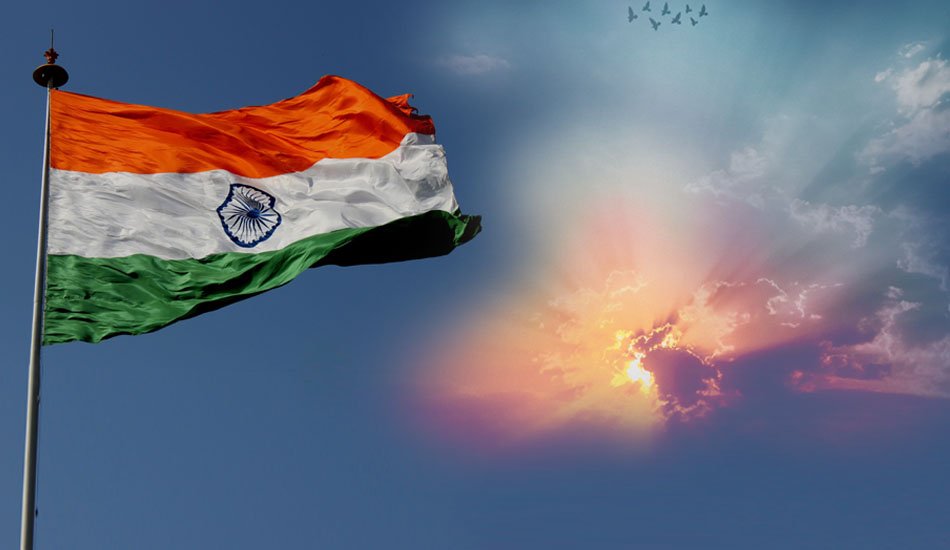
July 22: The Historic Birth of India’s Sovereignty and the Tricolor National Flag
a memorable and thrilling day in the national history of India. As the people of India awaited a new dawn while breaking free from nearly two centuries of colonial rule, exactly 24 days before Independence Day, the current ‘Tricolor’ (Tiranga) was officially adopted as the national flag of independent India during a special session of the Constituent Assembly held at Constitution Hall in Delhi.
When Pandit Jawaharlal Nehru presented this three-colored flag to the assembly and explained its significance, the hall resonated with thunderous applause and emotional support. Behind this historic event that turned the dream of an independent India into reality lies a long struggle, evolution, and unique artistic vision.
Designer Pingali Venkayya and the Evolution of the Flag
The foundation for the design of India’s national flag was laid by Pingali Venkayya, a great freedom fighter, geologist, and educationist from Andhra Pradesh. After extensive research between 1916 and 1921 analyzing flags from various countries around the world, he prepared a distinct draft design for India.
Historical Timeline of the National Flag’s Evolution
| Timeline | Flag Features & Design | Historical Context |
| 1906 | Red, yellow, and green stripes; inscribed with ‘Vande Mataram’ and depicted with a sun and moon. | First unofficial hoisting at the Calcutta session. |
| 1907 | Flag featuring the Saptarishi stars, hoisted by Bhikaiji Cama in France. | First message of Indian independence on an international platform. |
| 1921 | A spinning wheel (charkha) in the center between red and green stripes symbolizing self-reliance. | Designed by Pingali Venkayya at the instance of Mahatma Gandhi. |
| 1931 | Saffron, white, and green stripes with a central spinning wheel (Swaraj Flag). | Adopted as the official national flag of the Indian National Congress. |
| 1947 (July 22) | Replaced the spinning wheel with the 24-spoked navy blue ‘Ashoka Chakra’. | Final official approval as the national flag of independent India. |
From Charkha to Ashoka Chakra: A Revolutionary Shift in Vision
At the heart of Mahatma Gandhi’s Swaraj movement was the ‘charkha’ (spinning wheel), which represented self-reliance and rural economic freedom. However, in 1947, when presenting India to the world as a sovereign state, the Constituent Assembly decided not to limit the flag to a specific movement or ideology, making it more universal and progressive.
Adopted from the Lion Capital of Ashoka at Sarnath, the navy blue Ashoka Chakra with 24 spokes represents Dharma (righteousness), dynamism, and continuous progress.
Deep Philosophical Meaning of the Colors
-
Saffron: Symbolizes courage, sacrifice, strength, and selflessness. It calls upon the nation’s political leadership and citizens to transcend personal interests and dedicate themselves to the welfare of the nation.
-
White: Symbolizes honesty, peace, purity, and truth. This color of light signifies that our national character should always remain transparent and non-violent.
-
Green: Symbolizes faith, growth, valor, and fertility. It reflects India’s rich agricultural heritage and deep relationship with nature.
-
Navy Blue Ashoka Chakra: The 24 spokes of the wheel represent the country’s relentless motion through the 24 hours of the day. The blue color represents the vastness of India’s mind, akin to the sky and the ocean.
July 22, 1947: The Historic Moment in the Constituent Assembly
The Constituent Assembly session commenced at 10:00 AM on July 22, 1947. Under the presidency of Dr. Rajendra Prasad, Jawaharlal Nehru moved the resolution regarding the national flag.
“This flag is not a symbol of the freedom of India alone, but a symbol of ultimate freedom for all people throughout the world.”
— Jawaharlal Nehru (July 22, 1947)
The resolution explicitly specified:
-
The ratio of the length to the width of the flag shall be 3:2.
-
There shall be three horizontal bands of equal proportions—saffron at the top, white in the middle, and green at the bottom.
-
In the center of the middle white stripe, there shall be a navy blue Ashoka Chakra, visible on both sides of the cloth.
Several flags crafted from Kanjeevaram silk and khadi fabric were displayed in the assembly that day, and the resolution was passed unanimously.
Flag Code of India and Proper Usage
Respecting the national flag is the fundamental duty of every Indian citizen. In 2002, amendments to the Flag Code of India clarified the rights and rules for citizens regarding the hoisting of the national flag:
-
Dignity and Cleanliness: A damaged, soiled, or faded flag should never be hoisted.
-
Positioning: At any event, the national flag must occupy the position of honor, placed above or to the right of any other flag.
-
Fabric: According to the Flag Code, the flag can be made of hand-spun or machine-made khadi, cotton, silk, or polyester cloth.
-
Commercial Use Prohibited: Using the national flag for commercial purposes, such as apparel, towels, or cushions, is a legally punishable offense.
Through initiatives like ‘Azadi Ka Amrit Mahotsav’ celebrating 75 years of independence and the ‘Har Ghar Tiranga’ campaign, the relevance of this historic day has grown even further today. Citizens interested in exploring deeper details about this symbol of India’s history, sacrifice, and unity can visit the official portal of the Flag Foundation of India.
Read More: Defying All Odds: Grocery Shop Owner’s 3 Children Crack NEET Together from Bihar’s Saharsa