
The World’s Only Floating National Park: Keibul Lamjao—A Natural Wonder Preserving Life on Water
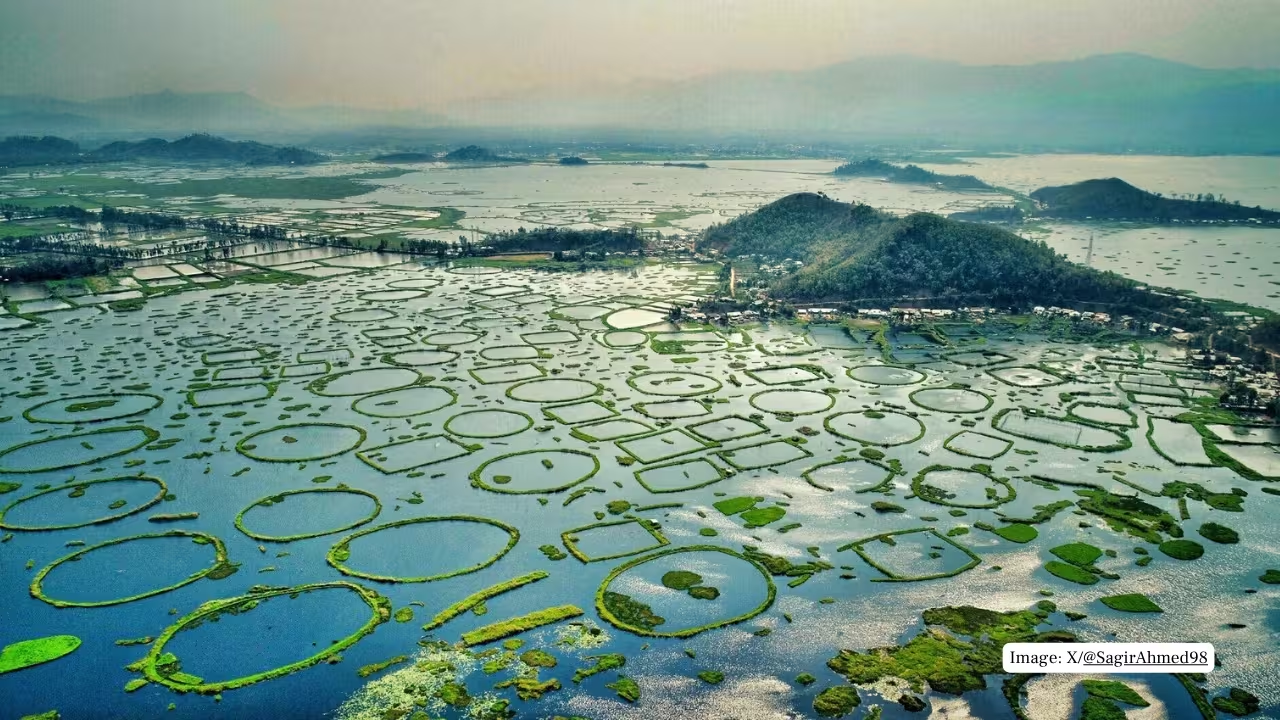
In a world where protected forests, wildlife sanctuaries, and national parks are traditionally established on solid land, one extraordinary destination challenges every conventional idea of conservation. Nestled in the northeastern Indian state of Manipur lies Keibul Lamjao National Park, the world’s only floating national park—an ecological masterpiece that appears to float gracefully on the shimmering waters of Loktak Lake, the largest freshwater lake in Northeast India.
Unlike any other protected area on Earth, Keibul Lamjao is built upon naturally formed floating masses of vegetation, soil, and organic matter known as phumdis. These floating islands create a living, breathing ecosystem that supports an astonishing variety of wildlife, including the endangered Sangai deer, Manipur’s state animal and one of the rarest deer species in the world.
Covering approximately 40 square kilometres, the national park represents one of nature’s most remarkable engineering marvels. It is not only a sanctuary for endangered wildlife but also a symbol of the delicate relationship between people, wetlands, and biodiversity. Scientists, conservationists, photographers, and nature lovers from across the globe recognize Keibul Lamjao as an irreplaceable ecological treasure whose preservation is essential for future generations.
A National Park Unlike Any Other
National parks are generally associated with mountains, forests, grasslands, or deserts. Keibul Lamjao, however, rewrites that definition. Situated in the southern portion of Loktak Lake in Bishnupur district of Manipur, the park rests entirely on floating biomass rather than solid ground.
From a distance, visitors often mistake the floating vegetation for ordinary grasslands. Only after closer observation do they realize that the “land” beneath their feet is actually floating over water.
This remarkable landscape changes subtly with the movement of water, creating a dynamic ecosystem that is constantly evolving. Such a phenomenon is unique to Loktak Lake, making Keibul Lamjao the only national park of its kind anywhere in the world.
The Story Behind Keibul Lamjao
The importance of Keibul Lamjao became increasingly evident during the twentieth century as the population of the Sangai deer declined drastically due to habitat loss and hunting.
Recognizing the urgent need for conservation, the Government of Manipur declared the area a National Park in 1977. The decision marked a turning point in India’s wildlife conservation history, focusing attention on protecting not just an endangered species but an entirely unique ecosystem.
Since then, forest officials, scientists, local communities, and conservation organizations have worked together to restore habitats, monitor wildlife populations, and increase public awareness about the ecological significance of the park.
Loktak Lake: The Lifeline of Manipur
Keibul Lamjao owes its existence to Loktak Lake, often referred to as the “Lifeline of Manipur.”
Stretching across hundreds of square kilometres depending on seasonal water levels, Loktak is the largest freshwater lake in Northeast India. For centuries it has supported local communities through fishing, agriculture, transportation, and freshwater supply.
The lake also plays a vital role in hydroelectric power generation, irrigation, flood control, and groundwater recharge. Thousands of families depend directly or indirectly on its resources for their livelihoods.
Beyond its economic importance, Loktak is an ecological hotspot that sustains numerous aquatic plants, fish species, migratory birds, amphibians, reptiles, and mammals.
Understanding Phumdis: Nature’s Floating Islands
The defining feature of Keibul Lamjao National Park is the presence of phumdis.
Phumdis are floating heterogeneous masses composed of partially decomposed vegetation, roots, soil, and organic matter accumulated over decades. They vary greatly in thickness—from a few centimetres to several metres.
During certain seasons, parts of these floating formations settle toward the lakebed, absorbing nutrients before floating upward again when water levels rise. This natural cycle helps maintain their ecological productivity.
Some phumdis are strong enough to support shrubs, tall grasses, and even trees. More importantly, they provide stable habitat for wildlife, allowing animals like the Sangai deer to move across them with remarkable agility.
Because phumdis exist naturally only in Loktak Lake, they represent one of the rarest wetland ecosystems on the planet.
Home of the Graceful Sangai Deer
No discussion of Keibul Lamjao National Park is complete without mentioning its most celebrated resident—the Sangai deer.
Scientifically known as Rucervus eldii eldii, the Sangai is often called the Brow-antlered Deer because of its distinctive antlers that curve elegantly over its forehead before extending outward.
The animal is also affectionately known as the “Dancing Deer.” This nickname comes from its graceful movement across the floating phumdis, where every step appears carefully balanced, creating the illusion of a slow, rhythmic dance.
Once believed to be nearly extinct, the Sangai has become a powerful symbol of successful conservation in India. Although its population has shown gradual improvement over the decades, it remains classified as Endangered, making continued protection essential.
For the people of Manipur, the Sangai represents harmony between humans and nature and occupies an important place in the state’s cultural identity.
A Rich Haven of Biodiversity
Although the Sangai attracts most public attention, Keibul Lamjao supports an extraordinary diversity of life.
The park provides habitat for numerous mammal species, reptiles, amphibians, insects, aquatic plants, and freshwater fish. Seasonal changes transform the landscape into an important refuge for migratory birds travelling along international flyways.
Birdwatchers visiting during winter may observe a variety of ducks, herons, egrets, cormorants, and other waterbirds that depend on Loktak Lake for food and shelter.
The combination of wetlands, floating vegetation, open water, and grasslands creates multiple ecological niches, allowing many species to coexist within a relatively small area.
Scientists consider the park an invaluable natural laboratory for studying wetland ecology, climate adaptation, and species conservation.
An Ecosystem in Perfect Balance
One of the most fascinating aspects of Keibul Lamjao is the intricate relationship among water, vegetation, wildlife, and human communities.
The phumdis filter water naturally, provide breeding grounds for fish, store carbon, and reduce erosion. Aquatic plants enrich the ecosystem by producing oxygen and supporting countless microscopic organisms that form the base of the food chain.
Fish depend on submerged vegetation for spawning, while birds feed on fish and aquatic invertebrates. Herbivores such as the Sangai rely on grasses growing over the floating biomass.
This interconnected web of life demonstrates how every component of the ecosystem contributes to maintaining ecological balance.
Any disturbance to one element—whether water quality, vegetation, or wildlife—can affect the stability of the entire system.
The Human Connection
For generations, communities living around Loktak Lake have shared a close relationship with the wetland.
Fishing remains the primary occupation for many families. Traditional knowledge passed down through generations enables local fishers to understand seasonal changes in water levels and fish movement.
People also utilize certain phumdis for sustainable livelihood activities while maintaining cultural traditions deeply connected to the lake.
Balancing human needs with environmental conservation remains one of the greatest challenges in managing the national park. Community participation has therefore become an essential component of conservation strategies.
International Recognition
Loktak Lake gained international recognition when it was designated a Ramsar Site in 1990, acknowledging its importance as a wetland of global significance.
This recognition highlights the ecological value of the lake and reinforces the need for sustainable management practices.
As climate change, pollution, and habitat degradation increasingly threaten wetlands worldwide, Loktak serves as an important reminder of the vital role freshwater ecosystems play in maintaining biodiversity and supporting human livelihoods.
Read more: Tokyo Triumphs: PV Sindhu Scripts History by Clinching the Japan Open Title!!!